Pathways to Net Zero for the Waste and Agriculture, Forestry and Other Land Use (AFOLU)
The Government of the Republic of Trinidad and Tobago through the Environmental Management Authority (EMA) executed the project ‘Pathways to Net Zero for the Waste and AFOLU Sectors of Trinidad and Tobago.’ This project was funded by the British High Commission, as part of the United Kingdom’s strategic commitment to global climate leadership. The project included nationwide geographic coverage, addressing the full spectrum of land-based and marine-influenced systems that intersect with the Waste and AFOLU sectors.
The Agriculture, Forestry and Other Land Use (AFOLU) and Waste sectors are critical components of the pathway to Net Zero for any country given their dual role as both sources and potential sinks of Greenhouse Gases (GHG). According to the Intergovernmental Panel on Climate Change Sixth Assessment Report (IPCC AR6), “the AFOLU sector includes managed ecosystems and offers significant mitigation opportunities while delivering food, wood and other renewable resources as well as biodiversity conservation, provided the sector adapts to climate change.” Additionally, the IPCC Waste sector categories refer to solid waste disposal, biological treatment of solid waste, incineration and open burning waste as well as wastewater treatment and discharge.
These sectors also play a critical role in achievement of Sustainability Development Goals (SDGs), and even more specifically:
• Methane abatement
• Circular economy development
• Ecosystem protection and restoration
• Community livelihoods and land-use planning
Development of credible, data-driven pathways for the aforementioned sectors included an assessment of the main sources of emissions, the options available for reduction or offset and the local policies and frameworks that can support Trinidad and Tobago’s transition to a net-zero, nature-positive economy.
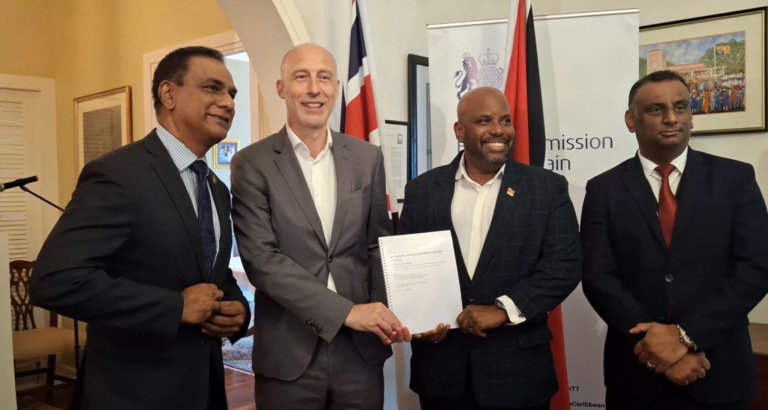
The final reports were launched at the British High Commissioner’s residence on 12 August 2026.